How to launch a resale program for your fashion brand
Decide what you will resell
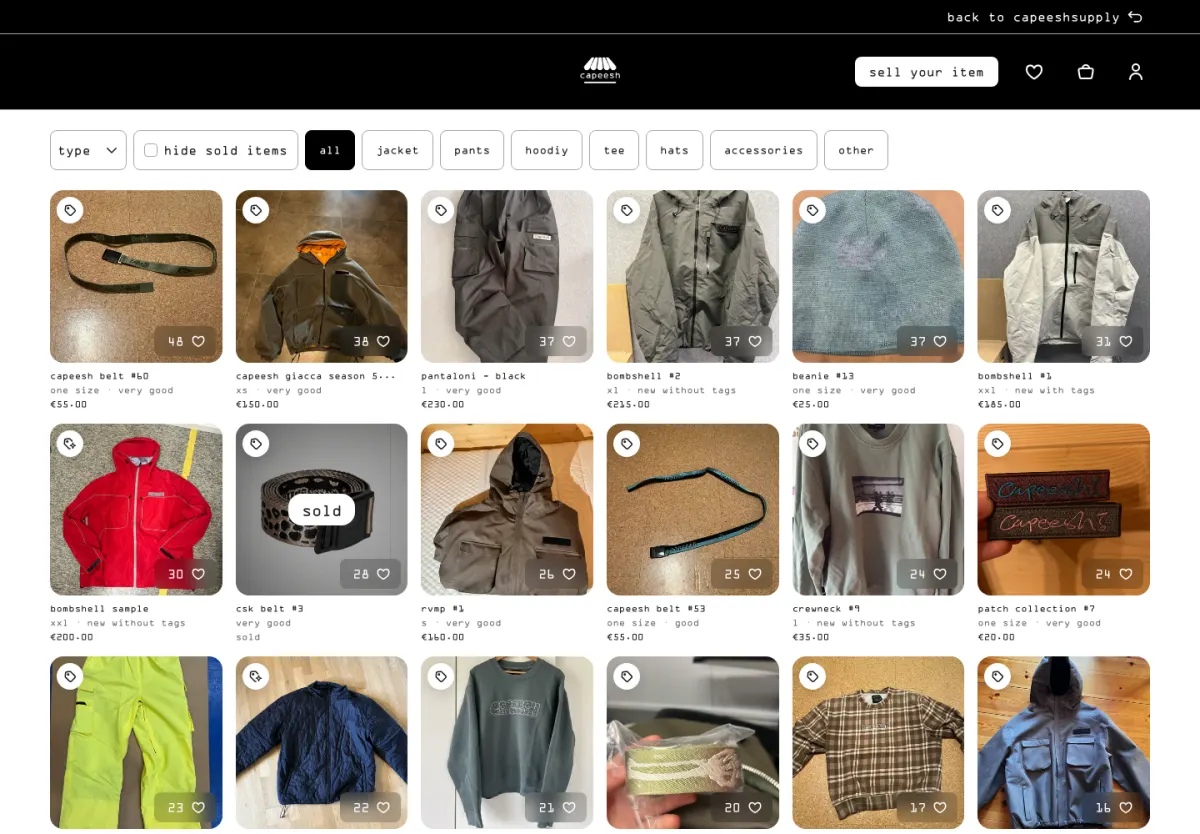
Most brand resale programs start with peer-to-peer resale: a customer lists a piece they bought from you, another customer buys it, and the parcel goes from one to the other. The listing sits under your brand instead of on a general marketplace, so the buyer is still shopping with you.
The second source is your own stock: customer returns that cannot go back to full price, samples and past seasons. On The Fashion People this is called Brand Direct, and it runs on the same storefront as the peer listings. It matters more now that the EU limits what can happen to unsold clothes: from 19 July 20262, large companies may not destroy unsold clothes, clothing accessories and footwear, medium-sized companies follow from 20302, and companies must keep records for five years2. Selling the stock again is one of the outcomes the rule is meant to encourage.
Choose how sellers are paid
Sellers can take store credit or cash. Store credit is the reason brands run resale themselves: it is spent in your shop, often on new full-price items. On The Fashion People, a seller who picks credit receives a gift card worth up to 110%3, a level the brand sets, and a seller who picks cash receives 90%3 of the selling price.
In The Fashion People data, 70%1 of sellers choose store credit, and store credits come with 2.5x1 higher customer lifetime value. Each gift card shows up in your Shopify dashboard next to the other gift cards you issue, with a note tying it to the resale transaction, so finance can reconcile it without a separate report.
Set the listing rules
Decide which categories you accept, what condition counts as sellable and who approves each listing. Approval is what makes a branded resale shop feel safer than a general marketplace, and it has to be quick, or sellers give up halfway.
On The Fashion People, a seller clicks "Sell your item", signs in with the email they used in your shop and picks the piece from their order history. The listing pulls the product description and stock images from Shopify, and the original retail price is set to the highest price the product has had, which the seller can lower if they paid less. Each listing is reviewed within 24 hours3; if something is missing, the seller gets an email asking for changes before it goes live.
Plan logistics, returns and countries
Peer-to-peer resale means many small parcels between private people, often across borders. Someone has to issue labels, track parcels, deal with a buyer who wants to send an item back and pay the seller once the sale is final. If your provider runs this, ask how returns and disputes are handled before you pick your markets.
Start with the countries where you already sell and ship. The Fashion People works with brands across 20+ European countries1 and runs delivery, including cross-border flows, payouts in different currencies, returns and support after launch.
Check the rules for platforms where customers sell
When customers sell to each other through your resale shop, someone is the platform operator. In the EU, Council Directive (EU) 2021/5144, known as DAC7, has applied since 1 January 20234 and puts the reporting obligation on platform operators; the sale of goods is one of the activities it covers. The UK has its own version, described in the guide to resale in the UK.
Agree in writing who acts as the platform operator, who collects seller details and who files the reports. Sales of your own stock raise different questions, because there your business is the seller.
Size it before you start
A first estimate needs three numbers: how much of your online sales could come back as resale, the price a pre-owned piece sells for, and how many sellers take store credit. The resale calculator on thefashionpeople.com uses 7%1 of online sales resold through the brand's resale site, a resale price of 60%1 of full price and 70%1 of sellers taking store credit, all taken from The Fashion People data.
Then look at what already happens without you. Search your brand name on Vinted and other second-hand apps: if your pieces are listed there, the demand exists, and the only question is who earns from it. The guide to Vinted for brands covers what you can do there.
A timeline that fits in two weeks
- Kickoff: a demo, the launch details and the resale strategy agreed together.
- Days 1 to 51: brand assets and settings shared, your shop connected through Shopify, WooCommerce or API access1, the storefront and workflows configured.
- Days 6 to 101: payments, store credit and logistics set up, the marketing and launch plan aligned, then a soft launch or a full public launch.
- After launch: ongoing support and monitoring.
FAQ
Can we resell our own returns and old stock, not only customers' items?
Yes. On The Fashion People this is Brand Direct. You receive 80%3 of a Brand Direct sale once the buyer has received and verified the item, and the remaining 10%3 with the regular disbursement, which runs every two weeks3 and also carries your earnings from peer sales.
Do we need developers or new hires?
No. The Fashion People builds and configures the platform, connects it to your shop and runs it after launch, so the work on your side is decisions, brand assets and launch marketing.
Is there a setup fee?
No. Pricing is shared on the first call.
Sources
- The Fashion People, home page
- European Commission, DG Environment, news of 17 July 2026
- The Fashion People, FAQ
- European Commission, DG TAXUD: DAC7
This guide is general information, not legal or tax advice. Check the rules for your markets with an adviser.
Let's get started
Talk to us about resale for your brand
Leave your work email and your shop address. A person from The Fashion People writes back to agree a time for a demo.