Take-back programs for fashion brands: buy-back, trade-in and resale
What counts as a take-back program
The term covers three different things, and a brand often means only one of them. The first is collection: a box in the shop or a prepaid label, after which the pieces go to sorting, reuse or recycling. The customer may get a voucher, but the brand does not sell the item again. The second is buy-back or trade-in: the brand pays the customer, in credit or in cash, and takes the piece into its own stock to resell it. The third is peer-to-peer resale: the customer lists the piece in the brand's resale shop, and it is sent straight to the next buyer.
All three keep the customer in contact with the brand after the first sale. They differ in who owns the item in between, who checks its condition and who carries the cost when it does not sell. These three questions decide the work and the margin, so answer them before you name the program.
Buy-back and trade-in: the brand takes the stock
In a buy-back you set a price for a returned piece and pay it when the piece arrives. A trade-in is the same deal with one condition: the customer receives the value only as credit toward a new purchase. Either way the piece is now yours. Someone has to receive the parcel, check and grade the item, clean or repair it, photograph it and store it until it sells.
The advantage is control. You decide what is offered again, in which condition and at what price, and the buyer gets an item the brand has checked itself. The cost is that you pay the customer before you know whether the piece will sell, and every item is handled by hand. A brand with a repair workshop or its own warehouse can absorb that. A small team usually cannot.
Peer-to-peer resale: the customer sells, the brand runs the shop
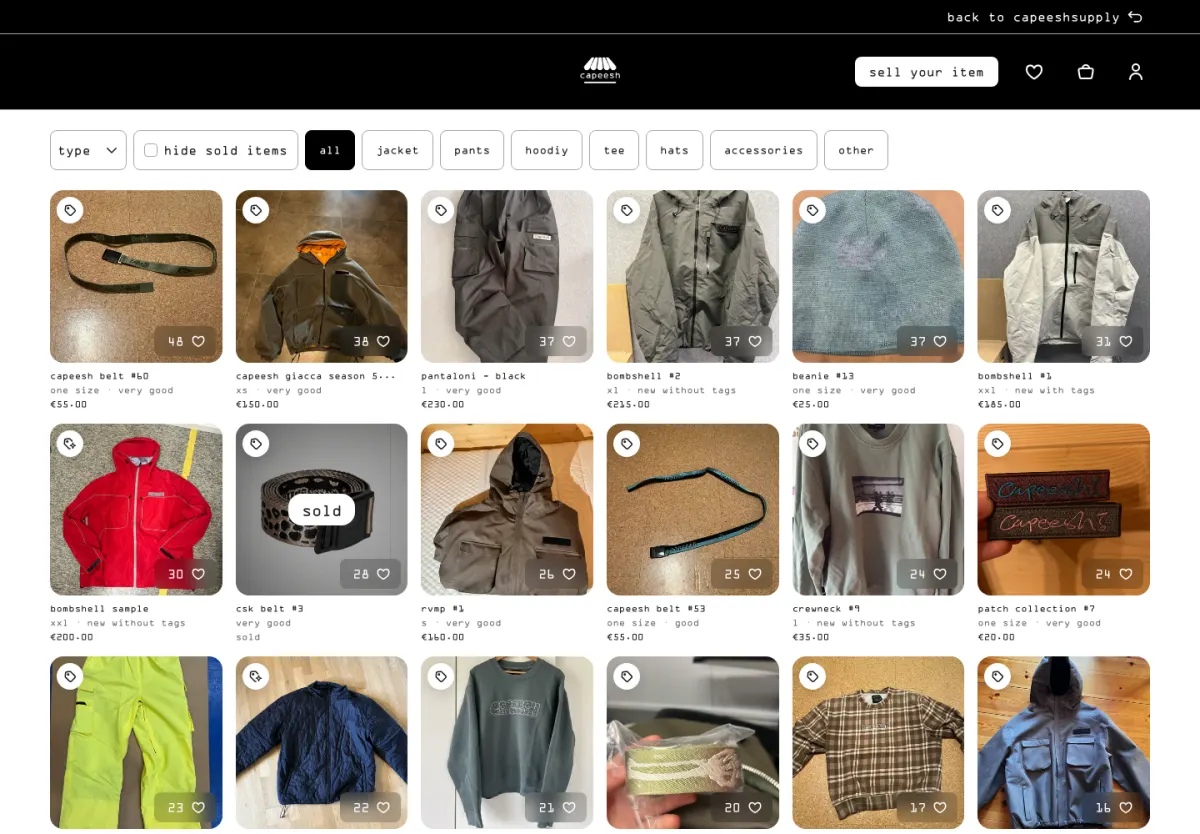
In the peer-to-peer model the piece never comes back to you. The customer lists it under your brand, the next customer buys it, and the seller ships it directly to the buyer. You hold no second-hand stock and pay nothing in advance, because the seller is rewarded only when the sale is final.
On The Fashion People, a seller signs in with the email they used in your shop and picks the piece from their order history, so the listing starts from your own product data. Each listing is reviewed within 24 hours2 before it goes live. The check that a buy-back does in a warehouse happens here twice: when the listing is reviewed, and when the buyer receives the item and confirms it before the seller is paid.
Your own returns, samples and past seasons can go into the same shop. On The Fashion People this is called Brand Direct, and those pieces sit next to the listings of your customers.
Store credit or cash: write the policy down
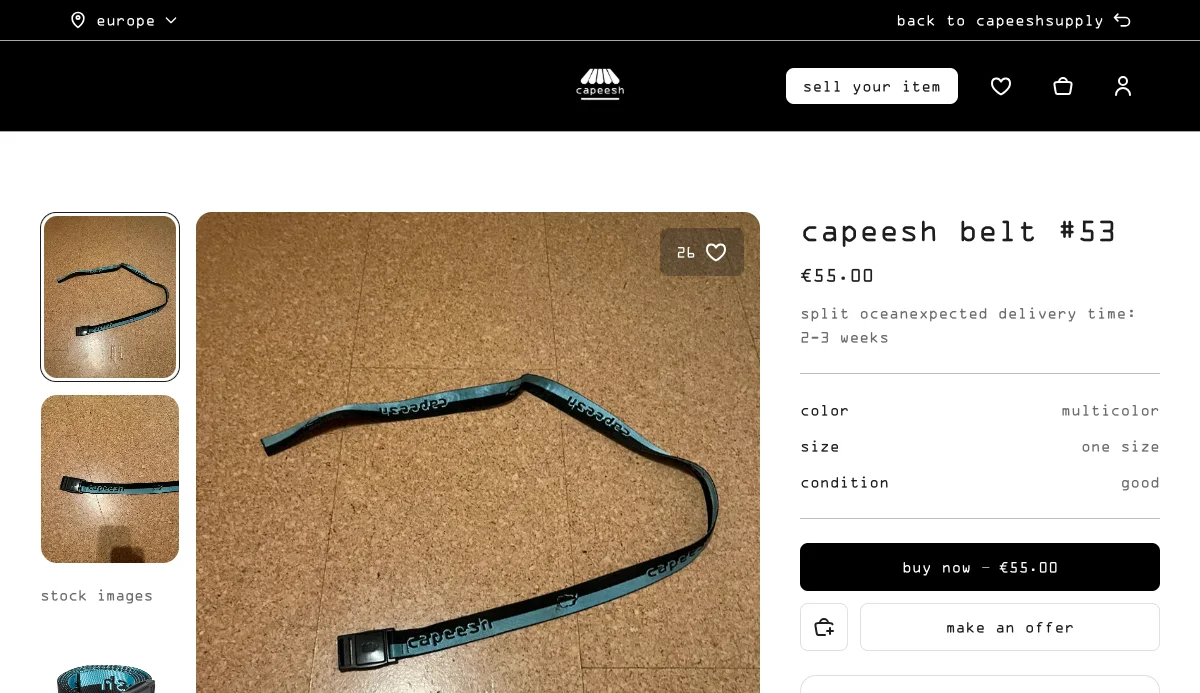
The reward is what makes customers take part, and store credit is what makes the program pay for the brand, because it is spent in your shop, often on new items. On The Fashion People, a seller who chooses credit gets a gift card worth up to 110%2; the brand sets the level. A seller who chooses cash gets 90%2 of the selling price.
Most sellers take the credit: 70%1 in The Fashion People data, and store credits come with 2.5x1 higher customer lifetime value. A written policy should say which pieces qualify, how the value is set, how long the credit stays valid, whether it can be used during a sale and what happens when a buyer sends an item back.
Which model fits your brand
- Collection fits when the aim is recycling and the pieces have little resale value.
- Buy-back or trade-in fits when you want to refurbish pieces yourself and sell them as checked by the brand, and you have the people and the space for it.
- Peer-to-peer resale fits when you want resale under your own name without stock, advance payments or new hires.
- A mix is common: peer-to-peer for customers' pieces, and the same shop for your own returns and past seasons.
What EU rules add
Two EU changes make take-back more than a marketing topic. Since 19 July 20263, large companies may not destroy unsold clothes, clothing accessories and footwear, and medium-sized companies follow from 20303. Stock that is sold again is not destroyed, so a resale channel for returns and past seasons is one way to stay within that rule.
The second change is Directive (EU) 2025/18924, which amended the Waste Framework Directive. Every Member State must have an extended producer responsibility scheme for textiles by 17 April 20284, and producers will pay for the collection, sorting and recycling of what they sell. The recitals of that directive name take-back services and second-hand retail among the circular business models the scheme should enable. The guide to textile EPR explains who counts as a producer and where resale stands.
How to start
- Search your brand name on second-hand apps to see how many of your pieces are already resold without you. The guide to Vinted for brands covers what you can do there.
- Choose the model, and the categories and conditions you accept.
- Write the reward policy: the credit level, the cash share and how long credit stays valid.
- Decide who checks condition and who handles parcels, returns and disputes.
- Pick the countries you open first, and tell customers where they already look: order emails, the account page and the care label.
- Leave the build for last. With a provider that runs the platform it takes about 10 days1; the guide to launching a resale program lists the decisions to bring.
FAQ
What is the difference between take-back, buy-back and trade-in?
Take-back is the general term for a brand accepting its products back from customers. In a buy-back the brand pays for the piece and resells it. A trade-in is a buy-back paid as credit toward a new purchase.
Do we need a warehouse to run a take-back program?
Not for peer-to-peer resale: the piece goes from the seller to the buyer, and the brand holds no second-hand stock. A buy-back or trade-in does need a place to receive, check and store the pieces.
Should sellers get store credit or cash?
Offer both and make credit the better deal. On The Fashion People, credit can be worth up to 110%2, cash is 90%2 of the selling price, and 70%1 of sellers take the credit.
Which shop systems can a branded resale shop connect to?
The Fashion People connects through Shopify, WooCommerce or API access1. With Shopify, sellers list from their order history and gift cards appear in your Shopify dashboard.
Sources
- The Fashion People, home page, checked 8 November 2026
- The Fashion People, FAQ, checked 8 November 2026
- European Commission, DG Environment, news of 17 July 2026, checked 8 November 2026
- EUR-Lex: Directive (EU) 2025/1892, checked 12 November 2026
This guide is general information, not legal or tax advice. Check the rules for your markets with an adviser.
Let's get started
Talk to us about resale for your brand
Leave your work email and your shop address. A person from The Fashion People writes back to agree a time for a demo.