Textile EPR in Europe: what it means for fashion brands
What the directive requires
The EU amended its Waste Framework Directive with Directive (EU) 2025/18921, which entered into force on 16 October 20252. Every Member State must set up an extended producer responsibility scheme for textiles. Under it, producers cover the costs of collecting used and waste textiles, transporting and sorting them, preparing them for re-use, recycling them and disposing of what remains.
Three dates matter. Member States have until 17 June 20271 to bring their national law into line. The schemes must be established by 17 April 20281. From 17 April 20291 the obligations also apply to micro-enterprises, which the directive describes as enterprises which employ fewer than 10 persons and whose annual turnover and annual balance sheet does not exceed EUR 2 million1. A country whose scheme already covered micro-enterprises when the directive entered into force may keep it that way, and countries that already run a scheme apply their own rules today.
Who counts as a producer
The directive defines the producer by the first sale in a country, not by who made the garment. A producer can be a manufacturer, an importer or a distributor, whatever the selling technique. You are one if you are established in a Member State and supply products there for the first time under your own name or trademark. You are also one if you resell there, under your own name, products made by others that do not carry their maker's name, or if you are the first to supply there, on a professional basis, products that come from another country.
Distance selling is the fourth case, and it is the one that applies to online shops. A company that sells directly to end users in a Member State where it is not established is the producer there. It must appoint, by written mandate, an authorised representative in that country, and a producer responsibility organisation can take that role if the producer wishes. Member States may ask the same of sellers established outside the EU. Producers register in each Member State where they sell, and the Commission is to set up a website with links to all national registers.
Which products are covered
An annex of the directive lists the products by customs code. It covers clothing and clothing accessories, knitted or not, blankets, bed, table, toilet and kitchen linen, curtains and other furnishing articles, hats, footwear, and clothing and accessories made of leather. Member States may also set up a scheme for mattresses.
Because the list works by customs code, check each product line against it. Accessories that are not clothing accessories, such as bags, need a careful look. National lists can use other words: the Italian draft decree, for example, names leather goods among its products.
How the fee is set
Producers do not run the collection themselves. They entrust a producer responsibility organisation, which organises collection, sorting and recycling on their behalf and charges them a fee. The directive says that the fee is based on the weight of the products and, where appropriate, their quantity, and that it is modulated on the basis of ecodesign requirements adopted under Regulation (EU) 2024/17813. France already works with such adjustments: its scheme provides for bonuses for products that meet environmental performance criteria.
Member States may go further against fast fashion. Where they find it appropriate, they can require the organisations to adjust the fee to a producer's practices, and the criteria the directive names include the life span of the products and the length of their useful life beyond the first user. France has acted on this already: an order of 24 August 20264 added a penalty linked to industrial and commercial practices to its scheme.
Where resale fits
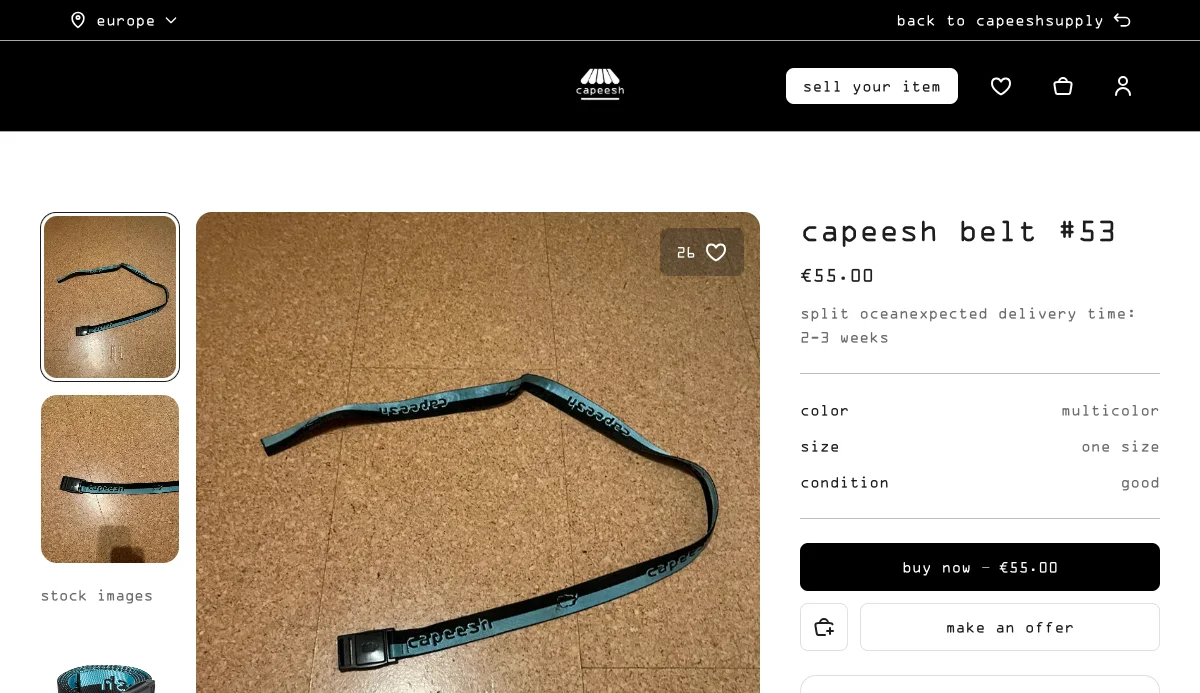
Selling a used piece again is a different act from the first sale. The directive's definition of a producer does not include those who supply used textiles, textile-related products or footwear that have been assessed as fit for re-use. Your new products stay under the producer duty wherever you sell them. How a national law treats a brand's own resale shop is for that law to say, so ask the producer responsibility organisation of each country before you assume.
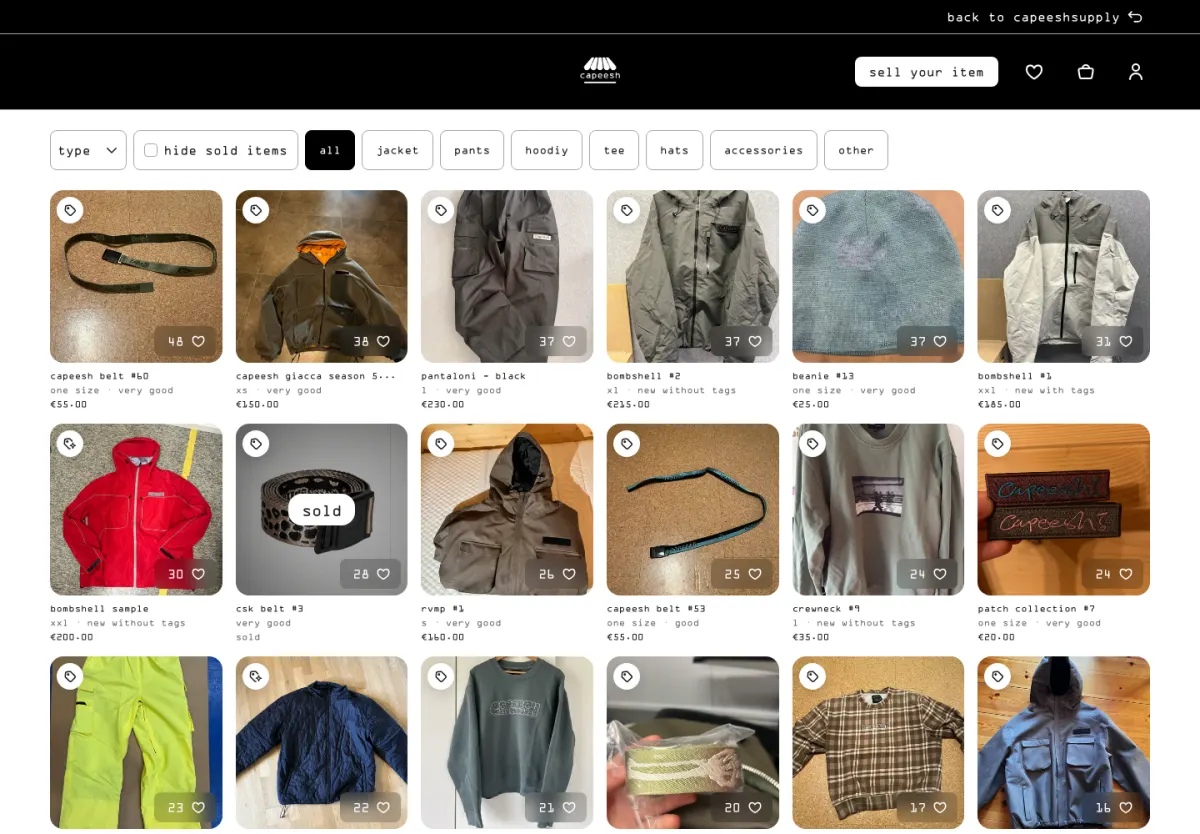
Resale also matters for the fee. One of the criteria a Member State may use to adjust it is the length of a product's useful life beyond the first user, and the recitals name take-back services and second-hand retail among the business models the scheme should enable. A brand that runs resale under its own name knows how many of its pieces find a second owner, which is the kind of figure these criteria point to. On The Fashion People, each resale listing starts from the order history of the customer, so it is tied to a product in your catalogue.
Where the countries stand
- France: the scheme for clothing, household linen and footwear has existed since 20094. It has one approved organisation, Refashion, and its rules provide for a fund for financing repairs and for bonuses for products that meet environmental criteria. The anti-waste law known as AGEC has also banned the elimination of unsold non-food products since 1 January 20225 for products covered by a producer responsibility scheme.
- The Netherlands: a decree on extended producer responsibility for textiles has been in force since 1 July 20236.
- Germany: on 27 March 20267 the environment ministry published a key points paper to prepare a new textile law, which is to transpose the EU rules.
- Spain: the ministry put a draft royal decree on textile and footwear products and their waste out for public comment until 4 September 20258. Check the ministry's page for the current status of the text.
- Italy: the ministry consulted on a draft decree for clothing, footwear, accessories, leather goods and home textiles until 5 May 20259. Check the ministry's page for the current status of the text.
What to do now
- List the countries where you sell to end users, including sales from your own online shop to other Member States.
- For each country, find out whether a scheme already runs, which organisation you would join and whether you need an authorised representative.
- Collect the data the fee is built on: units and weight sold, per country and per product type.
- Check your product lines against the annex of the directive and against each national list.
- Decide where used pieces, returns and past seasons go. The guide to take-back programs compares the models, and the guide to the digital product passport covers the product data.
FAQ
When does textile EPR start in the EU?
Member States must transpose the directive by 17 June 20271 and have their schemes in place by 17 April 20281. Micro-enterprises follow from 17 April 20291. France and the Netherlands already run national schemes.
Does textile EPR apply to a brand that only sells online?
Yes. A company that sells by distance contracts directly to end users in a Member State where it is not established is a producer in that country, and it must appoint an authorised representative there.
Does EPR apply to second-hand clothing?
The directive's definition of a producer does not include those who supply used textiles assessed as fit for re-use. Check how the national law of each country applies this.
What is a producer responsibility organisation?
A legal entity that organises the producers' obligations on their behalf, financially or financially and operationally. In France it is called an éco-organisme, and for textiles it is Refashion.
Sources
- EUR-Lex: Directive (EU) 2025/1892, checked 12 November 2026
- European Commission, DG Environment, Waste Framework Directive, checked 8 November 2026
- European Commission, DG GROW, announcement of 20 July 2026, checked 8 November 2026
- Ministère de la Transition écologique: filière REP textiles (TLC), checked 12 November 2026
- Ministère de la Transition écologique: loi AGEC, checked 8 November 2026
- Staatsblad (Dutch official journal): decree on extended producer responsibility for textiles, checked 12 November 2026
- German Federal Environment Ministry (BMUKN): key points paper on extended producer responsibility for textiles, checked 12 November 2026
- Spanish Ministry for the Ecological Transition (MITECO): public consultation on the draft royal decree on textiles and footwear, checked 12 November 2026
- Italian Ministry of Environment and Energy Security (MASE): public consultation on the draft textile EPR decree, checked 12 November 2026
General information from the directive and the national pages listed below, not legal advice. Check the rules for your markets with an adviser.
Let's get started
Talk to us about resale for your brand
Leave your work email and your shop address. A person from The Fashion People writes back to agree a time for a demo.